Palo Alto Networks Bangalore:
GCC Workplace Design Balancing Technology and Human Connection
Palo Alto Networks, Bangalore
Design & Build
101,000 SF
The Challenge
Palo Alto Networks came to Space Matrix with a paradox at the center of its brief.
As a Global Capability Center within the company's JPAC network, the Bangalore facility needed to scale fast, welcoming over 500 new employees, while operating under the access-control discipline that any global cybersecurity leader must enforce as a matter of principle. Security and openness are natural adversaries in office space design. Lock a floor down too tightly, and mentorship, spontaneous conversation, and community wither. Open it too freely, and the very protocols that define the client's business are compromised.
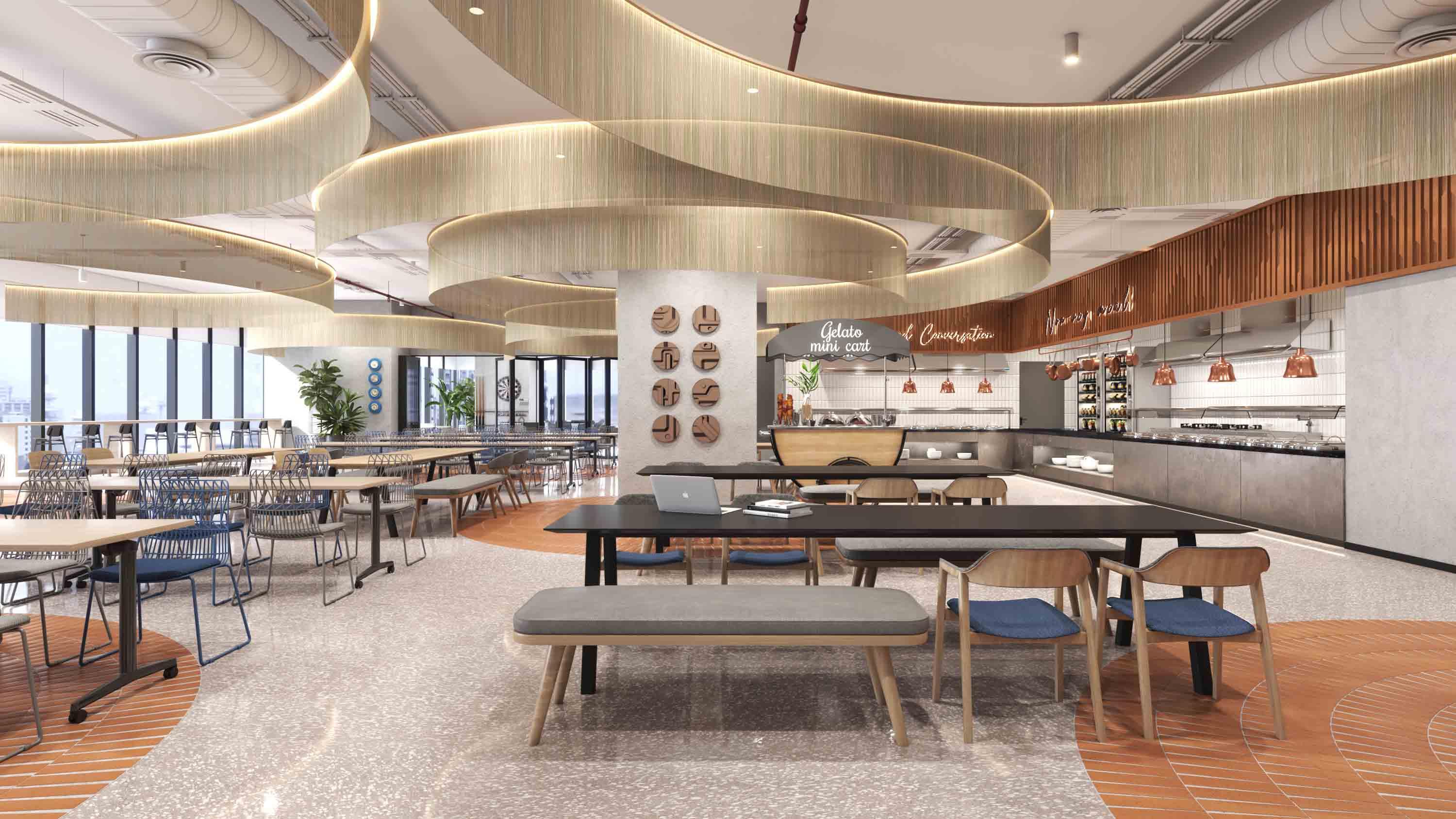
The brief itself acknowledged the trap most fast-growing GCCs fall into: a large, monotonous floor of workstations, efficient on paper, but disconnected from the culture, mentorship, and sense of place needed to make a delivery center feel like a destination rather than a waystation.
For a company whose product is trust in digital security, the workplace design itself needed to prove that security and humanity were not mutually exclusive.
Palo Alto Networks came to Space Matrix with a paradox at the center of its brief.As a Global Capability Center within the company's JPAC network, the Bangalore facility needed to scale fast, welcomin...read more

The Solution
Space Matrix answered with a concept it called the Synaptic Biome, an interconnected ecosystem modeled on the neural pathways that let the human brain transmit information, deliberately echoed in a workplace design built to secure and enable the flow of ideas.
Neighborhoods, not a sea of desks. The floor plate was divided into three distinct neighborhoods, giving 500-plus new employees a legible sense of team and place rather than an undifferentiated expanse of desks.
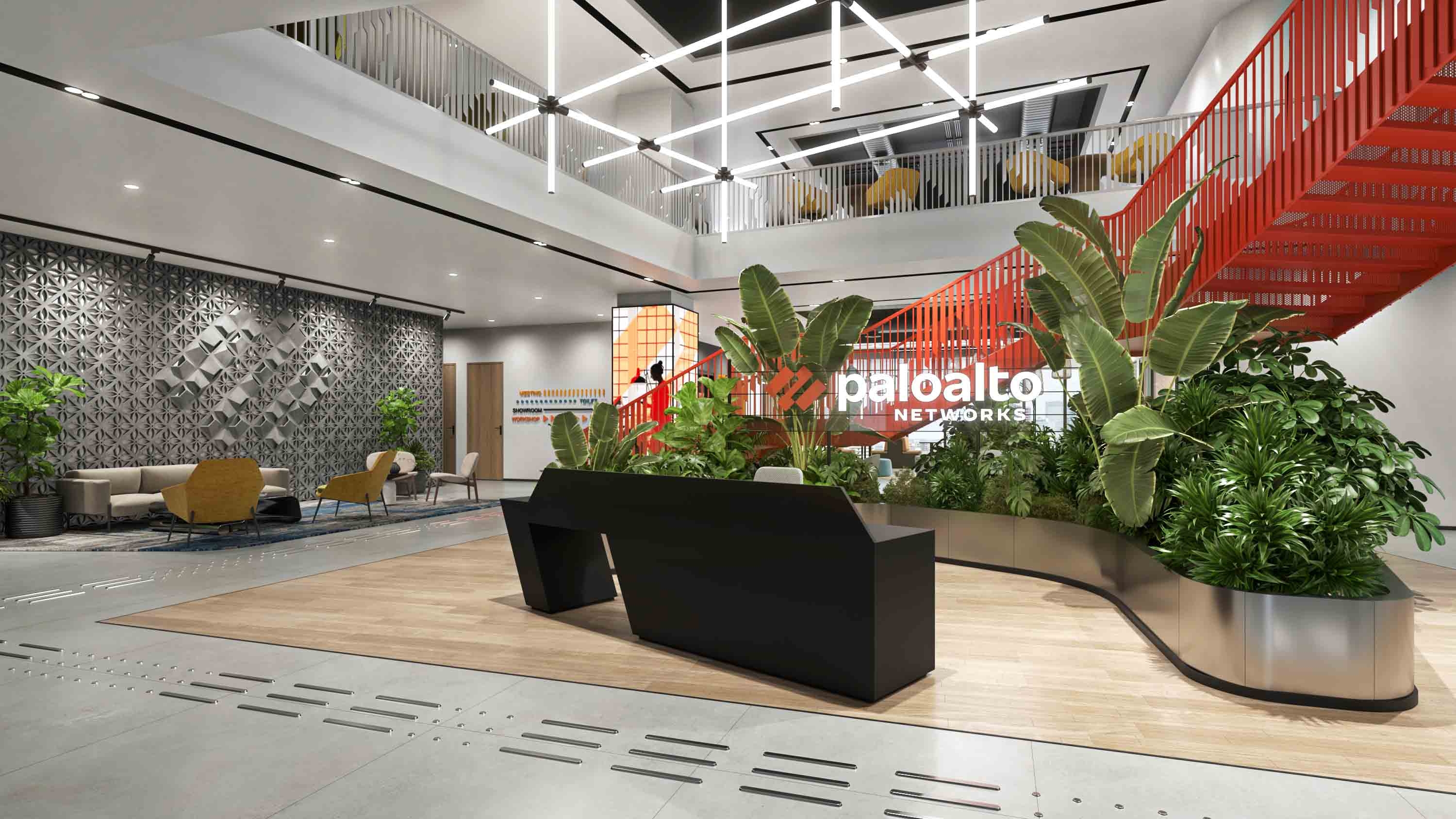
A staircase that changes how people move. The most dramatic move was structural: a central staircase and a large floor cutout were introduced between the ninth and tenth floors, creating a natural point of congregation that let people move between levels without being funneled back through the lift lobby every time.
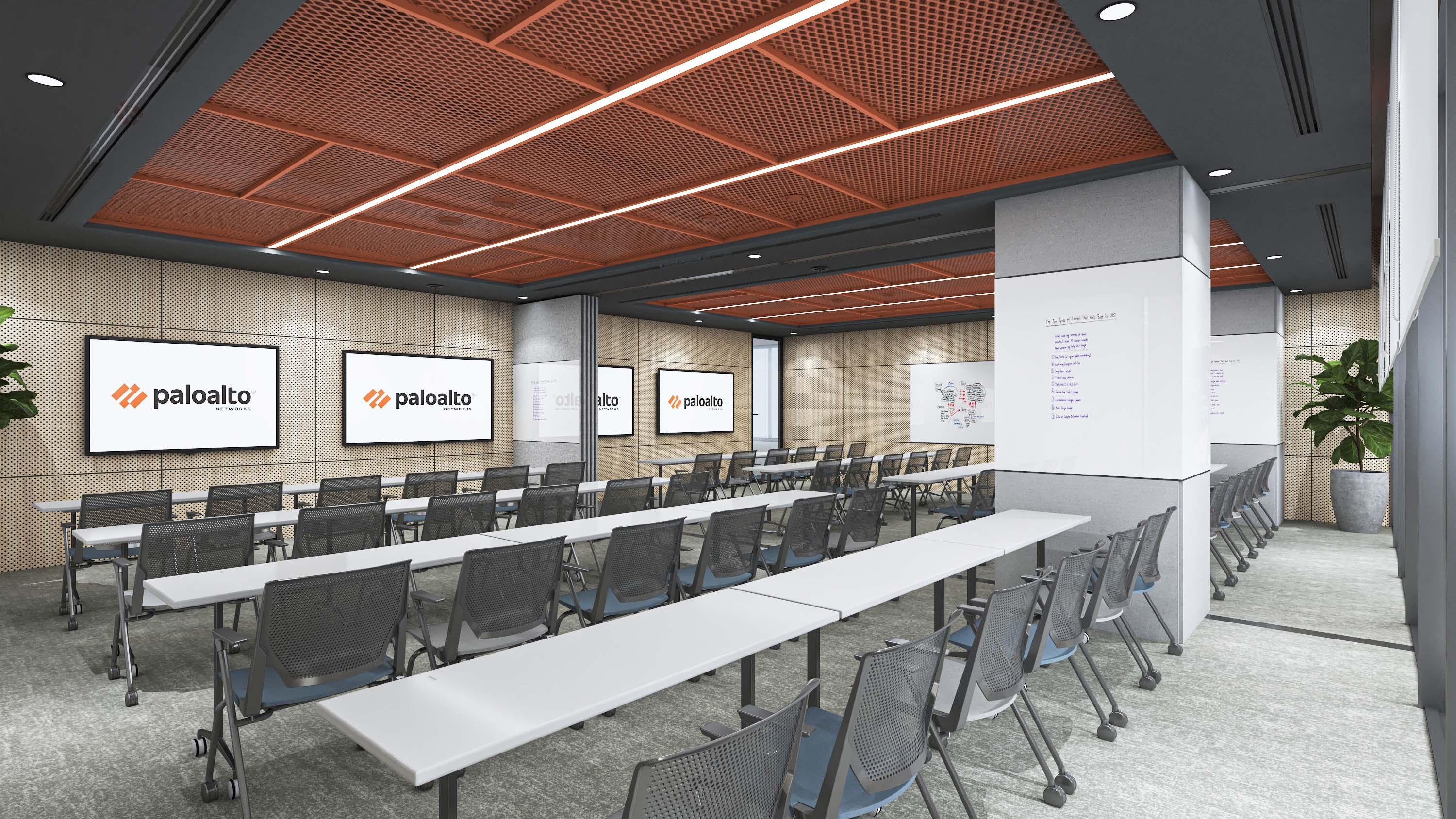
Security that disappears into the experience. Around this spine, layered access control was woven directly into the movement strategy itself, regulating visitor zones, training areas, and secure environments so unobtrusively that security became something employees felt as ease, not friction.
Physical and digital as one system. Technology extended the same philosophy into a "Phy+gital" strategy. The boardroom's SunRoof technology adjusts lighting temperature to match external conditions or international time zones, a small but telling detail for a team collaborating globally.
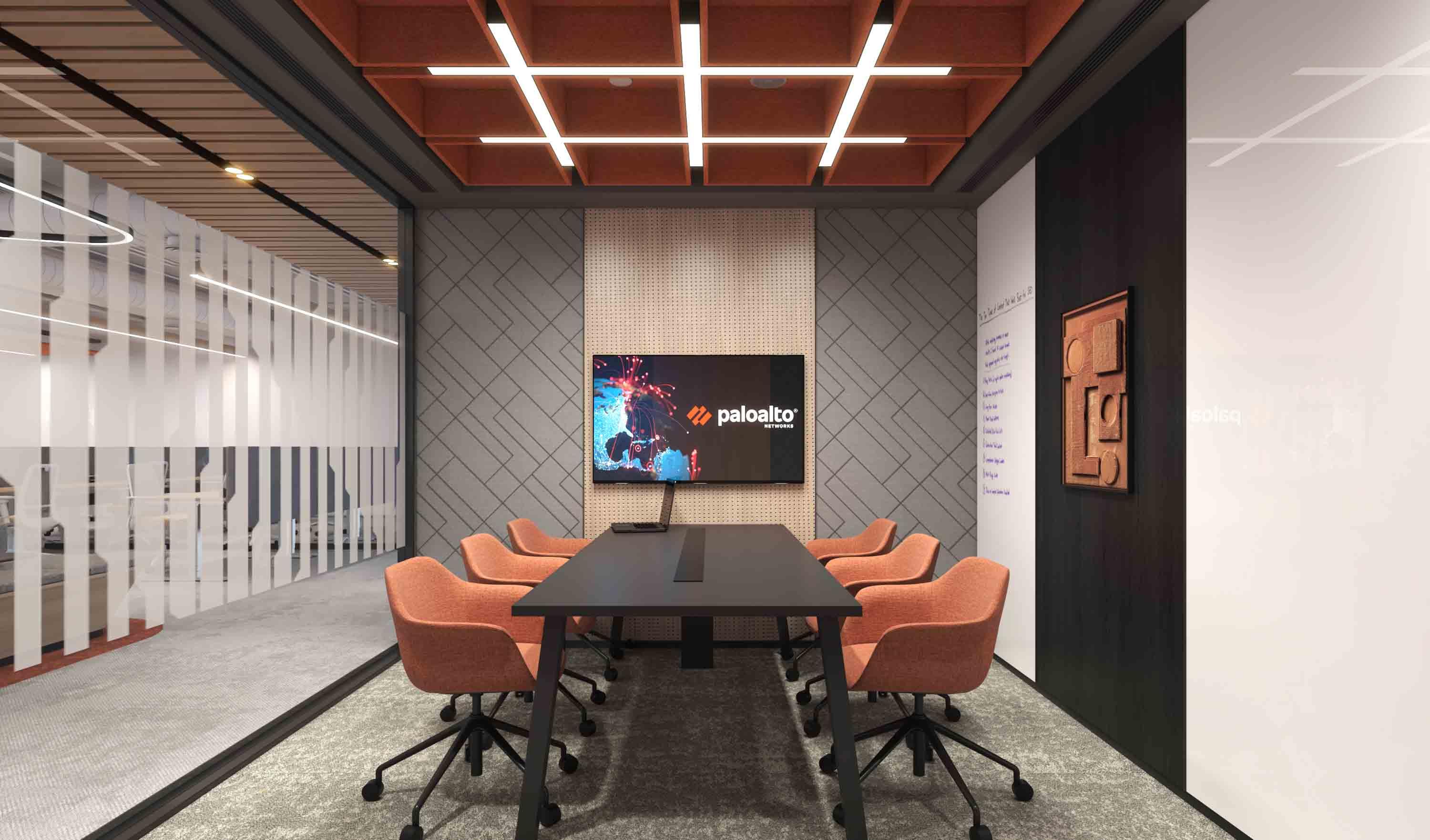
A local story inside a global network. Rather than defaulting to a global template, the design pulled Bangalore and Karnataka's own craft heritage into the fabric of the building, Channapatna artistry, Bidriware influences, and narratives drawn from Malgudi Days, while meeting rooms were named after Palo Alto Networks' JPAC offices, tying this GCC visibly into the network of sister sites it belongs to. Tactile artworks designed for visually impaired users ensured the story of connection extended to every employee, not a subset of them.
Space Matrix answered with a concept it called the Synaptic Biome, an interconnected ecosystem modeled on the neural pathways that let the human brain transmit information, deliberately echoed in a wo...read more
The Result
The Synaptic Biome concept proved its central premise: a highly secure cybersecurity workplace design could still be genuinely open and human.
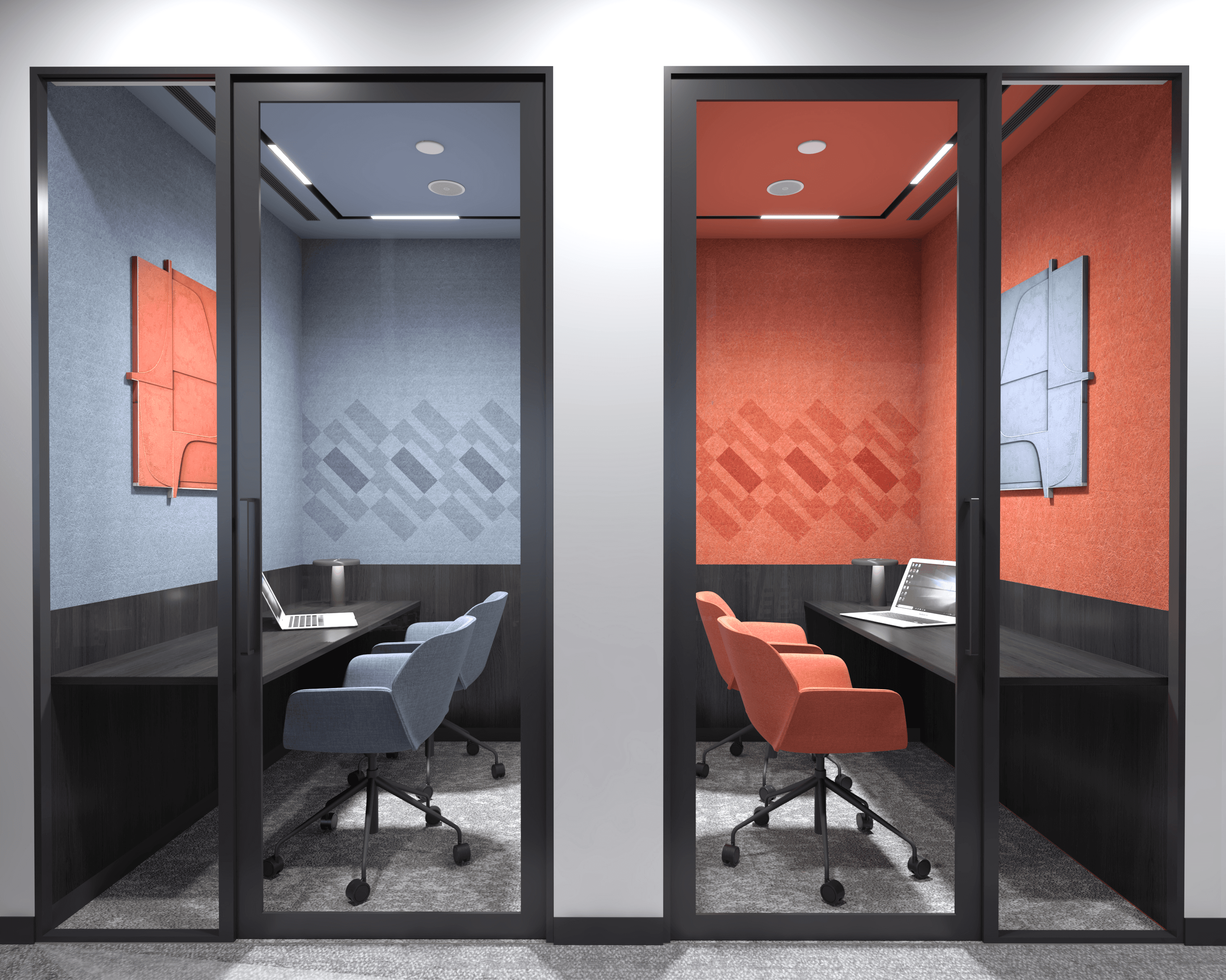
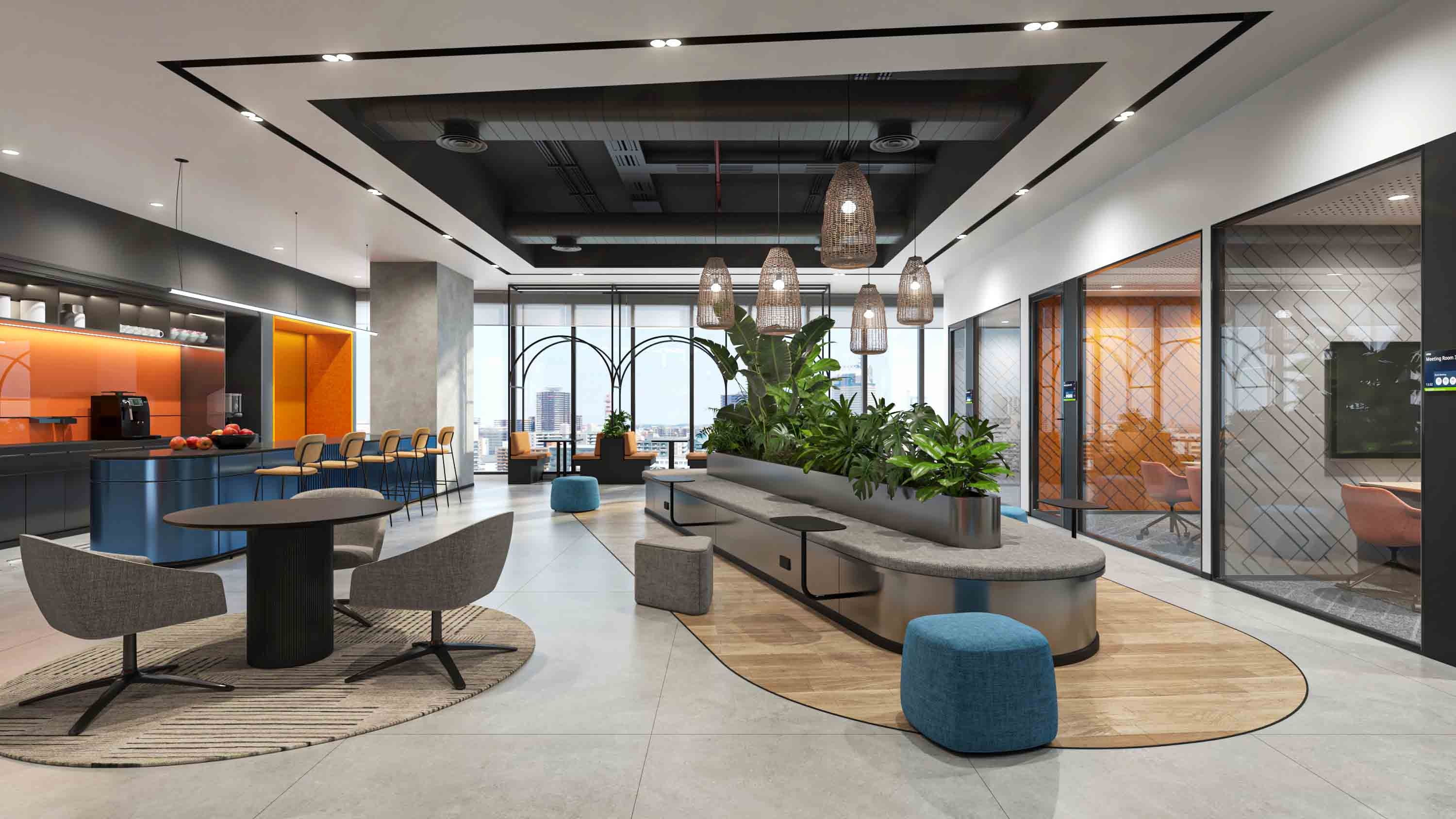
Palo Alto Networks now operates across 517 workstations and 607 total work settings, supported by 72 four-person collaboration rooms, 23 focus pods, a 28-person executive meeting space, and a 450-person townhall capacity, all without compromising the layered access control the business requires. Sustainability measures, including an atmospheric water generation system producing roughly 4,000 litres of potable water daily and daylight-informed workstation planning, reinforced the well-being agenda alongside the security one.
The project's success was validated commercially: it led to Space Matrix being invited to pitch for two additional Palo Alto Networks projects, a direct signal of client confidence in the outcome. For a GCC, this result reflects more than a successful fit-out. It demonstrates that a center built to global security standards can simultaneously become a genuine talent magnet and a source of organizational pride, strengthening Bangalore's role as a strategic hub within Palo Alto Networks' global operations rather than a peripheral one.
The Synaptic Biome concept proved its central premise: a highly secure cybersecurity workplace design could still be genuinely open and human.Palo Alto Networks now operates across 517 workstations an...read more